



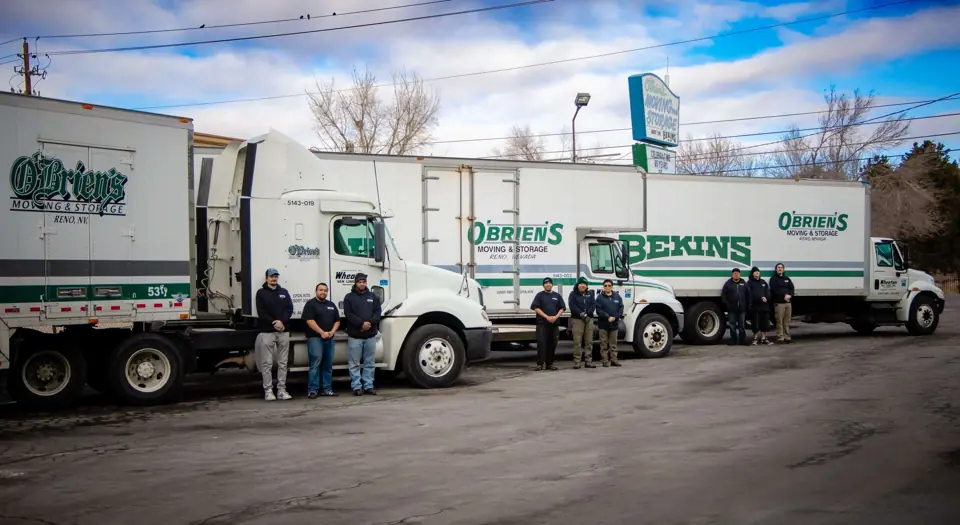
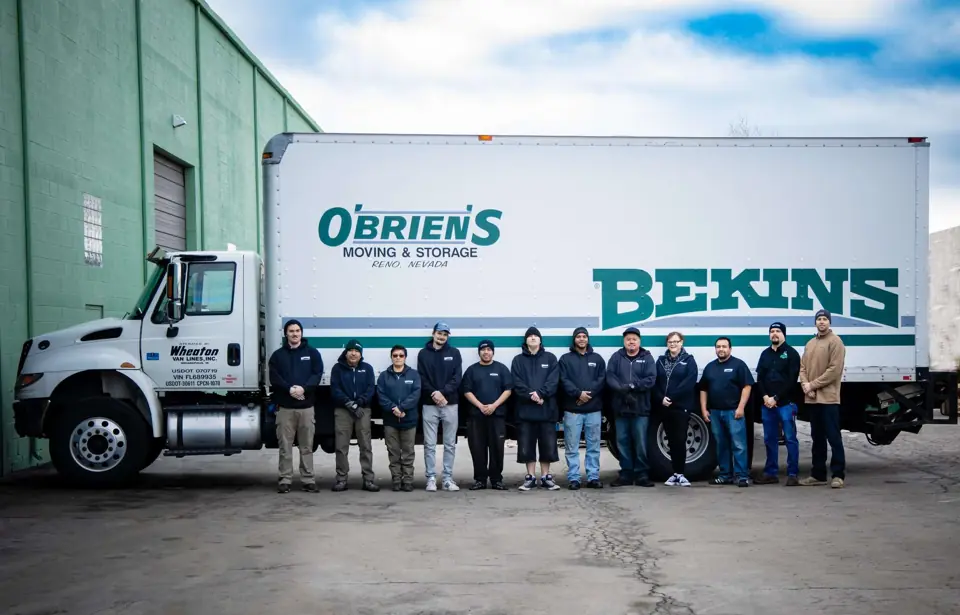
A portable container is a box delivered to your driveway that you fill and a carrier picks up. A moving truck is a vehicle with a crew. Neither is better in the abstract, so this guide lines them up against the four decisions.
Decision one: who loads
With a container you pack, load and strap everything yourself, or you hire labor to do it. A bad load shifts in transit, so weight distribution and wrapping matter. With a truck and crew, trained movers load to a plan, with pads and straps.
If you like the container idea but not the lifting, loading and unloading help is available. O'Brien's loads and unloads rental trucks, trailers and PODS, which keeps the container and removes the heavy work.

Decision two: where it sits
A container may need to sit on your driveway or street before it leaves, and cities can have rules about it. Check with the city or your homeowners association before it arrives. A moving truck loads and leaves the same day for a local move.
If you need your goods held between homes, a container may sit in a company's yard, while a mover can keep them in a warehouse. O'Brien's runs a 30,000 square foot warehouse at the Sparks yard, with wooden vaults 7 ft x 7 ft x 5 ft, and vault storage starts from $40 per month. See full-service storage.
Decision three: how far
Short local moves suit a truck and crew. Long-distance moves can use either, and each has its own paperwork. An interstate household goods mover works under 49 CFR Part 375, with a written estimate, an inventory and a bill of lading. Read how interstate moves work.
Delivery timing is described differently for each service. Ask for the delivery window in writing, and compare it to your move-in date.
Decision four: who is accountable
Every interstate carrier should have a USDOT number you can look up. Use the guide to checking a mover's USDOT number and the FMCSA SAFER lookup. Ask each company what protection applies to your goods in transit and in storage, and get the answer in writing; see valuation coverage.
- Container: you load, it sits, a carrier hauls, you unload.
- Truck and crew: the crew loads, drives and unloads.
- Hybrid: your container or truck, loaded and unloaded by professionals.

A quick way to decide
Choose a container when you are flexible on timing, have helpers and room for it to sit. Choose a truck and crew when the date is fixed, the house is full, or you want one party responsible from start to finish. The portable containers vs full-service movers guide goes deeper, and a free in-home estimate gives you the other half of the comparison. Call 775-359-6683.