



People ask about tipping more than almost any other part of a move, because it is the one piece of the day that no document answers. The estimate lists services and charges. The bill of lading is the contract. Neither one mentions a gratuity, and a good crew does not expect you to guess at a formula.
Tipping is separate from the charges
Moving charges come from the estimate you signed and, on interstate moves, from the bill of lading. Federal rules require the bill of lading to state the form of payment the mover and its agents will honor at delivery, so the price you owe is already spelled out in writing. A tip sits outside that paperwork. It is a thank-you you give to the people who carried your belongings, and the amount is entirely yours to set.
Because of that, do not wait for the crew to ask. Decide ahead of time, and keep the tip in its own envelope or its own pocket so it never gets mixed up with the payment you owe the company.

What changes the amount people choose
There is no official figure, so most customers think about how hard the day was and how the crew handled it. A few factors tend to matter:
- Difficulty of the job: stairs, long carries from the truck to the door, narrow hallways and heavy pieces such as a piano or a safe take more effort than a ground-floor apartment.
- Care taken: wrapped furniture, protected floors and doorways, and patience with questions are all part of the service you are thanking.
- Length of the day: a crew that works from morning to evening on a large home has earned more thanks than a short load.
- Weather: loading in snow, heat or wildfire smoke is harder work, and Northern Nevada gets all three over the year.
- Your own budget: a smaller tip given sincerely is better than a large one that strains your move budget.
Who to hand it to
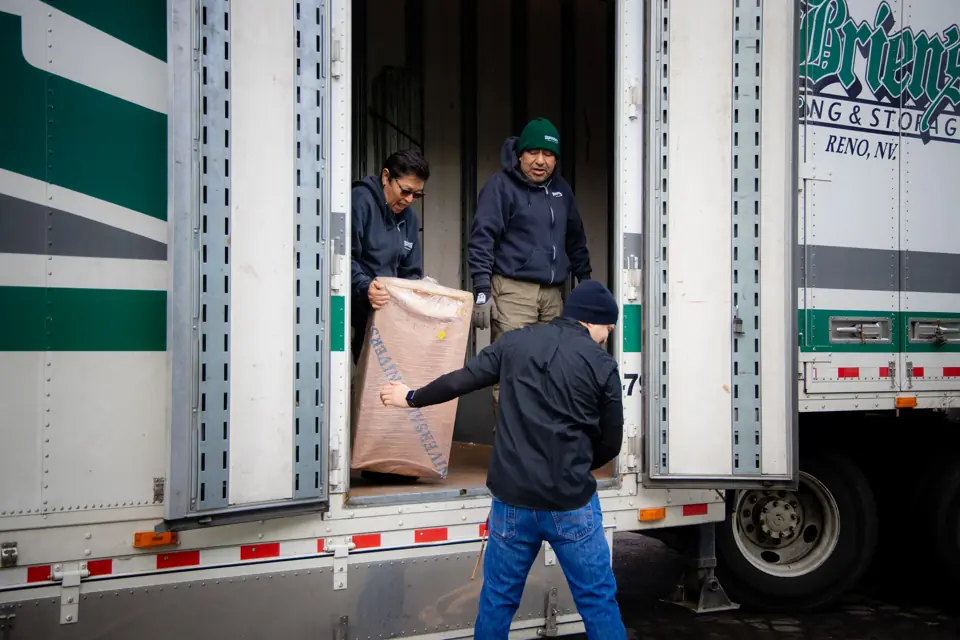
Hand the tip directly to the people on the crew, not to the office. If you are tipping each person, give it to them individually at the end of the job. If you prefer to give one amount, hand it to the crew lead and say plainly that it is for the whole team to share. Ask the lead who worked your move so that nobody who carried a heavy load is left out.
The people who scheduled your move and estimated it are not part of the tipping question. A kind review on Google, naming the crew if you remember them, is a thank-you that crews and families value.
Multi-day moves and storage
If your move stretches across two days, or loading happens one day and delivery to a vault or a new home happens later, you can thank the crew each day or all at once at the end. Different people may work each part of the job, particularly when goods go into vault storage first. Tipping at the end of each crew's work keeps the thanks with the people who earned it.
Long-distance moves work the same way. The crew that loads in one city is usually not the crew that delivers hundreds of miles away, so a tip belongs to whoever is standing in front of you when their part of the work is done.

Practical details on the day
Confirm in advance what forms of payment the mover accepts for the move charges, as the federal customer booklet advises, and carry a separate way to tip. Cash is the simplest for a crew to share. Cold water, a snack or lunch for a long day is a courtesy many customers offer in addition to any tip, and it costs little.
If something was damaged or missing, do not use the tip to settle it. Note it on the inventory at delivery and follow the claim steps on the moving claim guide. A tip is for the work done well, and a claim is a separate process with its own paperwork.