




Search results for this question are full of national averages that fit nobody. A one-bedroom apartment across Sparks and a four-bedroom house moving to another state share the word move and little else. This guide explains what actually builds a moving price so you can compare estimates on equal terms.
Local moves are priced on labor and time
For a move inside the Reno-Sparks area, the price follows the crew and truck you need and the hours the work takes. Three things drive the hours: how much you own, how hard it is to reach (stairs, elevators, long walks from the truck, narrow access) and how much packing the crew does. A home already packed in sturdy boxes loads faster than one the crew has to wrap, box and label. The details are on the local moving page.
Moves inside Nevada but outside the metro area are priced from a tariff approved by the Nevada Transportation Authority, and your estimator explains how that tariff applies to your route.

Interstate moves are priced on weight and distance
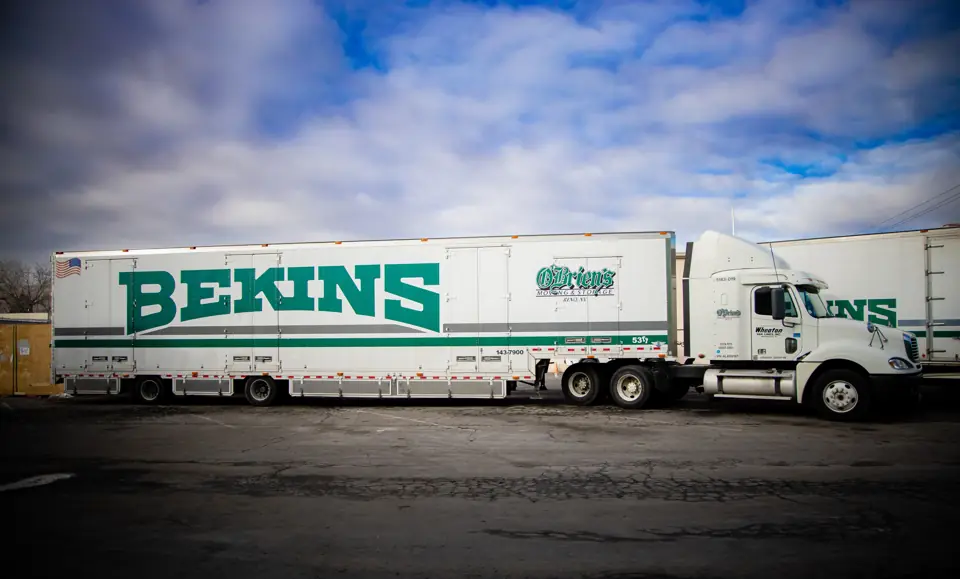
When a move crosses a state line, including a move from Nevada to California, federal rules govern the estimate. The price is built from the weight of the shipment, the distance it travels and the services you ask for. O'Brien's is a Bekins Van Lines agent, and on long-distance moves the Bekins network carries the shipment. The long-distance moving cost guide explains how weight is measured and billed.
Services and conditions that add to a bill
The base move is only part of a bill. Optional services such as packing, crating, appliance preparation and storage are listed separately on the estimate. Some charges come from conditions at your home, and the federal booklet calls them accessorial services:
- Stairs and flights: carrying items up or down steps (see flight charge).
- Long carry: a long walk between the truck and the door (see long carry).
- Shuttle: a smaller vehicle when a large truck cannot reach the address (see shuttle service).
- Bulky or high-value items such as pianos, pool tables and fine art.
- Valuation coverage above the basic level (see valuation).
Three ways to get a real number from O'Brien's
Start with whichever suits your stage of planning. A phone ballpark at 775-359-6683 gives you a rough range from a few questions. An online request lets you describe the move at your own pace. A free, no-obligation in-home estimate is the most accurate, because an O'Brien's estimator sees your furniture, your boxes and your access, and produces an itemized written estimate. The estimator also leaves 10 free heavy-duty boxes with you to start packing.
Read how our estimates work before the visit so you know what to expect.

How to compare two estimates
Compare like with like. Check that both estimates list the same rooms, the same packing, the same storage and the same coverage. Ask whether each is binding or non-binding, because on a non-binding interstate estimate the mover cannot require more than 110 percent of the estimate at delivery, with any balance billed after 30 days. Be wary of any estimate given without seeing your goods: federal rules require a physical survey on interstate moves unless you waive it in writing.
A very low number with few details is a reason to ask more questions, not a reason to book. Use the questions to ask movers as a checklist.